Afghan vs Iranian Saffron: How They Really Compare

Afghan and Iranian saffron come from the same plant, Crocus sativus, so neither country's saffron is automatically better than the other's. What really decides quality is the grade of the threads, how carefully they were harvested and dried, and how fresh they are — not the flag on the tin.
That said, there are real differences in how the two are grown, graded, sold and priced. This guide walks through them honestly, so you can compare any saffron you're thinking of buying.
Same Flower, Same Spice
Every saffron thread is the dried stigma of the saffron crocus. Each flower has three red stigmas joined to a pale yellow style, and the flowers bloom for only a few weeks each autumn. Everything is picked and separated by hand, which is why saffron costs what it does wherever it's grown.
Because Afghan and Iranian saffron are the same species, grown in neighbouring regions with similar dry, sunny climates, a top-grade thread from Herat and a top-grade thread from Khorasan in Iran will look, smell and cook in much the same way. A low-grade thread from either country will be weaker than a high-grade thread from either country.
Grade Matters More Than Country
Saffron is sorted in two different ways, and it helps to know both.
Trade grades: Negin, Sargol, Pushal and Bunch
These Persian trade names describe how much of the stigma is kept and how it is cut. They are used in both Afghanistan and Iran.
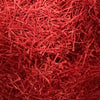
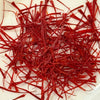
- Negin — long, all-red threads, carefully trimmed so no yellow style is left. The most selective cut.
- Sargol — only the red tips, usually shorter and more broken than Negin. Still all-red.
- Pushal — red threads with a little of the yellow-orange style still attached.
- Bunch (also called Dasteh or Konj) — the whole stigma with its style, tied in a small bundle.
The yellow style isn't fake — it's part of the flower — but it carries far less colour and aroma than the red stigma. The more style in the tin, the more saffron you need per dish.
Lab categories: ISO 3632
The international standard ISO 3632 grades saffron by laboratory testing rather than by appearance. It measures colouring strength (from crocin), aroma (from safranal) and flavour bitterness (from picrocrocin), and assigns numbered categories, with Category I the highest.
The two systems are separate. "Negin" tells you about the cut; "ISO Category I" tells you about measured strength. A good seller will be able to tell you both, or at least state the cut and origin clearly.
Where Each Is Grown
Iranian saffron
Iran is by far the world's largest saffron producer, with most of its crop grown in the Khorasan provinces in the northeast of the country. That scale means Iranian saffron is widely available in every grade, from excellent Negin to low-grade Bunch, and in every format from tins to powder.
Afghan saffron
Afghanistan's saffron is grown mainly in Herat province in the west, just across the border from Khorasan. Saffron farming there has grown considerably over the past two decades, much of it by farming families working small plots. Afghan saffron has won international taste awards, which has helped it become better known among cooks outside the region.
At Ghafori Foods, our Afghan Negin saffron comes from Herat, sold as whole threads only, and a purity card is included with every order.
Flavour, Colour and Aroma
At the same grade and freshness, most people will struggle to tell Afghan and Iranian saffron apart in a finished dish. Both should give a deep golden colour, a honey-like, slightly hay-like aroma and a gently bitter, floral taste.
What you're more likely to notice is the difference between grades and between fresh and old saffron. A fresh tin of Negin from either country will out-perform a two-year-old tin of Pushal from either country. We'd rather you judge saffron in your own kitchen than take anyone's word — including ours — that one origin is always superior.
Price Differences
As a general market observation, Iranian saffron is available in very large volumes, so you'll find it across a wide range of prices, including very cheap options. Afghan saffron is produced in smaller volumes and is less common on Canadian shelves.
Rather than comparing country to country, compare like with like: the same grade, the same format (threads, not powder), and the price per gram. If one tin is dramatically cheaper than others claiming the same grade, ask why — it may be a lower grade, old stock, powder, or not pure saffron at all.
How to Compare Any Saffron
Whichever origin you choose, these checks will tell you far more than the label's country name:
- Grade stated clearly. Look for Negin, Sargol, Pushal or Bunch, or an ISO 3632 category. Vague words like "premium" or "super" on their own don't tell you much.
- Origin stated clearly. Where it was grown, not just where it was packed.
- Whole threads. Threads are much easier to judge than powder.
- Colour of the threads. Deep red with no, or very little, yellow for the top grades.
- Cold-water test. Real saffron releases golden colour slowly; the thread stays red.
- Aroma when you open the tin. Strong, sweet and hay-like. Little or no smell usually means old or low-grade saffron.
- Freshness and storage. An airtight, dark container protects aroma.
For a fuller walkthrough of grading and buying, see our complete saffron buying guide, or browse the full saffron collection.
Which Should You Buy?
Buy the best grade you can from a seller who tells you the grade and the origin, sells whole threads, and stands behind the product. If that's Iranian saffron, great. If it's Afghan saffron from Herat, also great. Origin is part of the story; grade and freshness are what you'll taste.
If you'd like to try Afghan Negin, our 1g tin is a good starting point, and saffron ships free anywhere in Canada at every size.
Frequently Asked Questions
Is Afghan saffron better than Iranian saffron?
Not automatically. Both are the same species grown in neighbouring regions. At the same grade and freshness they're very similar. Compare grade, freshness and format first.
Is Afghan saffron the same as Iranian saffron?
It's the same plant, Crocus sativus, and uses the same trade grades (Negin, Sargol, Pushal, Bunch). The difference is where it's grown: Herat in western Afghanistan versus mainly Khorasan in northeastern Iran.
Has Afghan saffron won awards?
Yes. Afghan saffron has won international taste awards, which has raised its profile with cooks around the world.
What is the highest grade of saffron?
Among trade grades, Negin is the most selective cut: long, all-red threads with no yellow style. In lab testing, ISO 3632 Category I is the highest category.
Why is some saffron so much cheaper?
Usually because it's a lower grade with more yellow style, it's old, it's powdered, or it isn't pure saffron at all. Compare price per gram at the same grade.
-
Posted in
Afghan saffron, Buying Guides, Iranian saffron, Saffron, Saffron grades