How to Spot Fake Saffron: 7 Simple Checks at Home
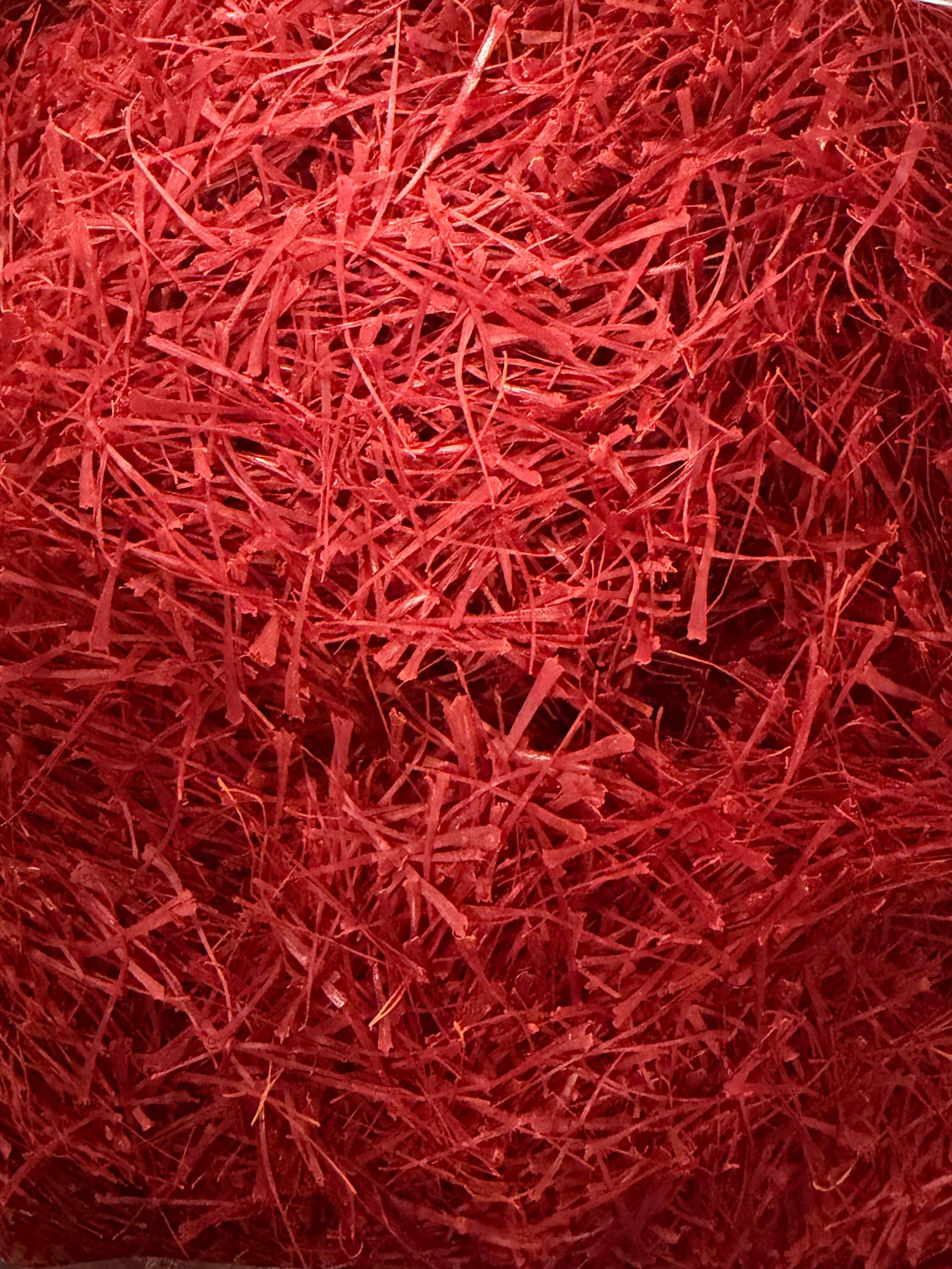
The quickest way to spot fake saffron at home is the cold-water test: real saffron threads release a golden-yellow colour slowly while the threads themselves stay red, whereas dyed fakes bleed colour fast and turn pale. Combine that with a close look at the thread shape, a sniff and a rub test, and you can catch most fakes in about fifteen minutes.
Saffron is one of the most commonly faked foods in the world because it's expensive by weight and hard to judge by eye. Here are seven simple checks anyone can do in their own kitchen, no equipment needed.
What Fake Saffron Is Usually Made Of
Most fake or adulterated saffron falls into a few groups:
- Other plant parts dyed red — safflower petals, corn silk, shredded flower petals or fibres coloured to look like saffron threads.
- Real saffron padded out — genuine threads mixed with dyed fibres, or with the yellow style of the saffron flower coloured red to add weight.
- Coated threads — real or fake threads coated in oil, syrup or other substances to add weight and shine.
- Adulterated powder — ground saffron mixed with cheaper coloured powders such as turmeric, paprika or safflower.
The checks below are designed to catch all of these.
Check 1: The Cold-Water Test
Drop three or four threads into a small glass of cold or room-temperature water and leave it for 10 to 15 minutes.
- Real saffron slowly releases a golden-yellow to orange colour that spreads gradually through the water. The threads stay red.
- Dyed fakes often release a strong red or orange colour almost straight away, and the threads may fade to pale or white as the dye washes out.
- Some fakes release almost no colour at all.
The colour of the water matters as much as the speed. Real saffron gives a yellow-gold tint, not a red one.
Check 2: The Thread Shape
Take a soaked thread out of the water and look at it closely, ideally on a white plate. A genuine saffron stigma is shaped like a little trumpet: thin at one end and flared open at the other, sometimes with a slightly frilled edge at the wide end.
Fakes made from fibres, corn silk or shredded petals are usually the same thickness from end to end, flat, or wiry. If none of your threads have that trumpet tip, be suspicious.
Check 3: The Colour of the Style
Look at the narrow end of the threads. In lower grades like Pushal and Bunch, you'll see some yellow or pale orange style still attached to the red stigma. That's normal — it's part of the flower, though it carries less colour and aroma.
What isn't normal is threads that are red all the way through but turn out to be yellow or white underneath once soaked. That's a sign the pale style has been dyed red to pass it off as stigma. Top-grade Negin should be all red because the style has been trimmed off, not coloured.
Check 4: The Smell
Open the tin and smell it before you test anything. Real saffron has a strong, distinctive aroma that people describe as honey-like, floral, hay-like and slightly metallic. It's noticeable as soon as the lid comes off.
If the saffron smells of nothing, smells dusty or musty, or smells oddly chemical or perfumed, it's either very old, very low grade, or not saffron.
Check 5: The Rub Test
Take a thread that has been soaking for a few minutes and rub it gently between your fingertips.
- Real saffron stays more or less intact and leaves a yellow-orange stain on your fingers.
- Fakes often fall apart into mush or fibres, or leave a red stain rather than a yellow one.
Dry threads can be checked too: real saffron feels dry and slightly brittle. Threads that feel greasy, sticky or unusually heavy may have been coated.
Check 6: A Price That's Too Low
Saffron is picked and separated by hand, one flower at a time. That labour can't be skipped, so genuine top-grade saffron can't be sold cheaply. If a seller offers "pure Negin" for a fraction of what other sellers charge for the same grade, the most likely explanation is a lower grade, old stock, a padded-out blend, or a fake.
Compare price per gram, at the same grade and in the same format. A lower price is fine if the seller is honest that it's a lower grade.
Check 7: The Format and the Seller
Be careful with powder
Ground saffron is the easiest form to adulterate, because once it's powdered you can't see thread shape, check the style or do a rub test. Turmeric, paprika and other coloured powders blend in easily. If you need powder, buy whole threads and grind them yourself just before cooking, with a pinch of sugar to help.
Buy from a seller who states grade and origin
A trustworthy seller will tell you plainly what you're buying: the grade (Negin, Sargol, Pushal or Bunch), where it was grown, and whether it's threads or powder. Be cautious with labels that only say "premium", "super" or "100% pure" without saying what grade or where from.
Our Afghan Negin saffron is sold as whole threads only, grown in Herat, Afghanistan, and every order includes a purity card so you can run these checks yourself. For more on grading and where saffron comes from, read our complete saffron buying guide and our comparison of Afghan vs Iranian saffron.
What If Your Saffron Fails?
One failed test isn't always proof — very old real saffron can be weak in colour and smell, for example. But if your saffron fails two or three of these checks, it's reasonable to assume it isn't what the label says. Stop using it in place of real saffron and contact the seller.
For a lab-level answer, saffron can be tested against the ISO 3632 standard, which measures colouring strength, aroma and flavour compounds. That's mainly used by importers and wholesalers, but it's worth knowing a reputable supplier should be comfortable with the idea.
Ready to cook with saffron you can trust? Browse our saffron collection. Saffron ships free anywhere in Canada at every size.
Frequently Asked Questions
What colour should saffron turn water?
Golden yellow to orange, released slowly over 10 to 15 minutes. A fast red colour is a warning sign.
Can real saffron have yellow parts?
Yes. The yellow part is the style, which is attached to the red stigma. Lower grades like Pushal and Bunch include some of it. Top-grade Negin has it trimmed off.
Is saffron powder fake?
Not always, but powder is much easier to adulterate and much harder to check at home. Whole threads are the safer choice.
Does real saffron dissolve in water?
No. Real threads release their colour into the water but stay intact and red. Threads that break down into mush are suspicious.
How can I tell if saffron is old rather than fake?
Old saffron still has the right trumpet shape and still releases yellow colour, just more weakly, and its aroma fades. Fakes usually fail the shape and rub tests too.
-
Posted in
Afghan saffron, Buying Guides, Fake saffron, Saffron